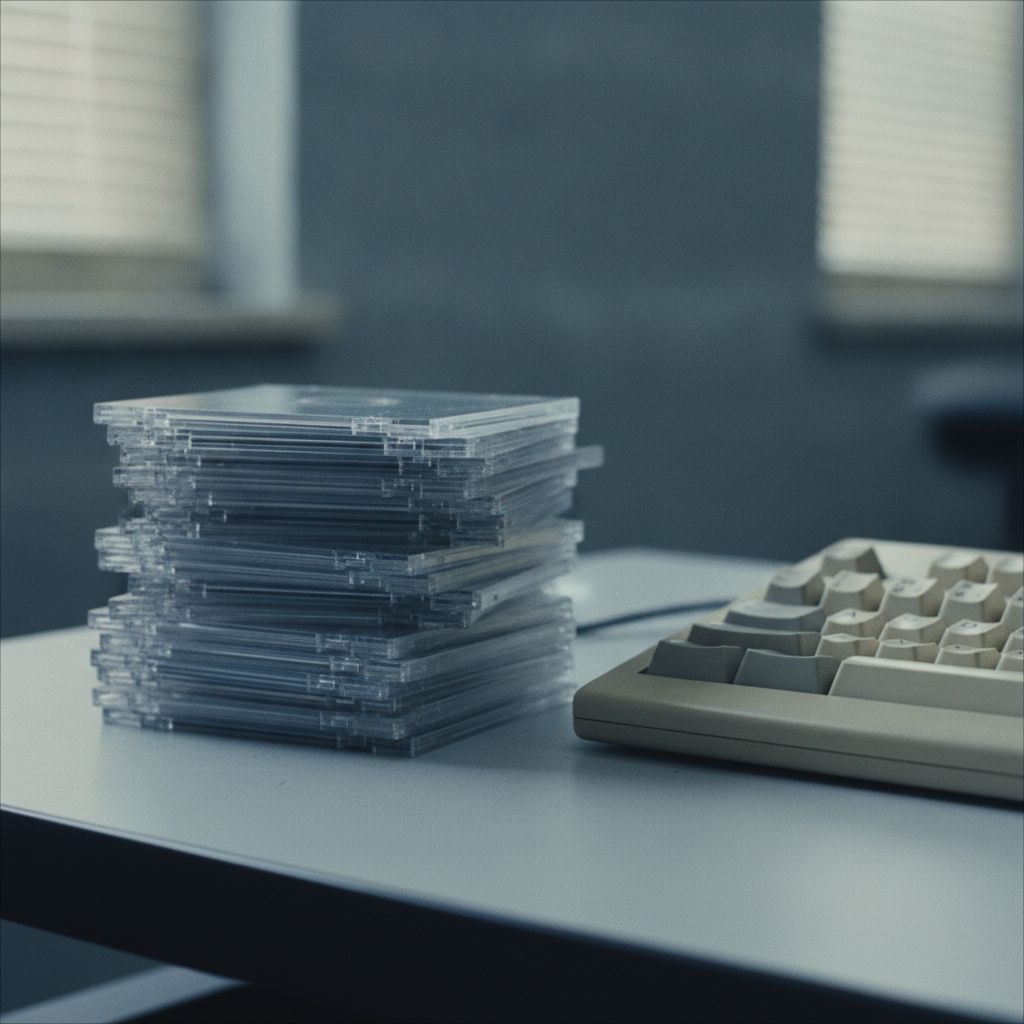
Pull a boxed PC game off the shelf from around 1998 and there is a decent chance it holds more than one disc. The instinctive explanation is that the game was simply too big for one CD. Sometimes that was true. More often it was not, and the real reasons are more interesting than raw capacity.
A CD-ROM held about 650 megabytes. A hard drive of the same period might offer two to six gigabytes in total, shared with the operating system and everything else the machine did. That mismatch, rather than the size of the game itself, shaped how releases were put together.
Reading from disc was slow, and installing everything was not an option
A 4x drive managed roughly 600 kilobytes per second on a good day, with seek times measured in hundreds of milliseconds. Streaming full-motion video or a large audio track off that disc during play was possible but fragile. Any stutter was immediately audible.
Publishers responded by splitting content by access pattern rather than by size. Assets needed constantly went on the hard drive during installation. Assets needed occasionally, particularly cutscenes and music, stayed on the disc and streamed. A second disc was frequently just the video and audio that nobody wanted to spend 400 megabytes of precious drive space on.
This is why installation size options mattered so much. Minimum, typical and full installs were not marketing choices. They were the difference between a game that ran and a game that would not fit.
Copy protection wanted a disc in the drive
Through this period the standard anti-piracy measure was a disc check. The game confirmed that a particular disc was present, sometimes by reading a deliberately malformed sector that ordinary duplication software would not reproduce faithfully.
If the check demanded a disc anyway, there was no benefit to compressing everything onto one. A design that kept audio and video on disc two, then asked for disc two during the cutscene, achieved both goals at once. The player would have needed to swap discs regardless.
Duplication economics rewarded more discs, not fewer
Pressing CDs at volume was cheap, and got cheaper with quantity. The marginal cost of a second disc in an already-manufactured box was small compared with the engineering cost of squeezing content into one. Faced with a choice between weeks of asset compression work and adding a disc that cost pennies, publishers added the disc.
There was also a presentation argument. A box with three discs looked substantial on a shelf next to a box with one. Whether that shifted units is hard to establish now, but the belief that it did was widespread enough to be repeated in interviews from the period.
The awkward legacy for anyone installing these games today
Two habits from that era create most of the problems now. The first is the hard-coded drive letter. Installers that recorded the CD drive as D: still expect D:, and a modern machine with a virtual drive mounted elsewhere will fail a check that has nothing to do with the disc itself.
The second is the split install itself. Copy the contents of every disc into one folder and many of these games run perfectly, because the code looks for files by relative path and no longer cares which physical disc they came from. Where that fails, it usually fails on the protection check rather than on the assets.
- Check whether the game reads a configuration file recording the install path and drive letter. Editing it is often quicker than reinstalling.
- Copy all discs into a single directory before troubleshooting anything else. It resolves a surprising share of missing-file errors.
- Expect audio to be the awkward part. Redbook audio tracks are not files on the disc and do not survive a naive copy.
That last point catches people out repeatedly. A game using Redbook audio played music by asking the drive to play an audio track directly, the same way a CD player would. Copying the data track gets the game; it does not get the soundtrack. Extracting those tracks to a supported format and pointing the game at them is a separate job, and one worth knowing about before concluding that a copy is broken.
What the multi-disc era actually tells us
The shape of these releases was set by constraints that vanished within a few years. Drives got faster, hard drives got enormous, and broadband made physical distribution optional. What remains is a body of software with assumptions baked in about where things live and how fast they can be read.
Understanding those assumptions is most of the work in getting one of these games running today. The problem is rarely that the game is old. It is that the game is confidently expecting a world that no longer exists.